

Introduction
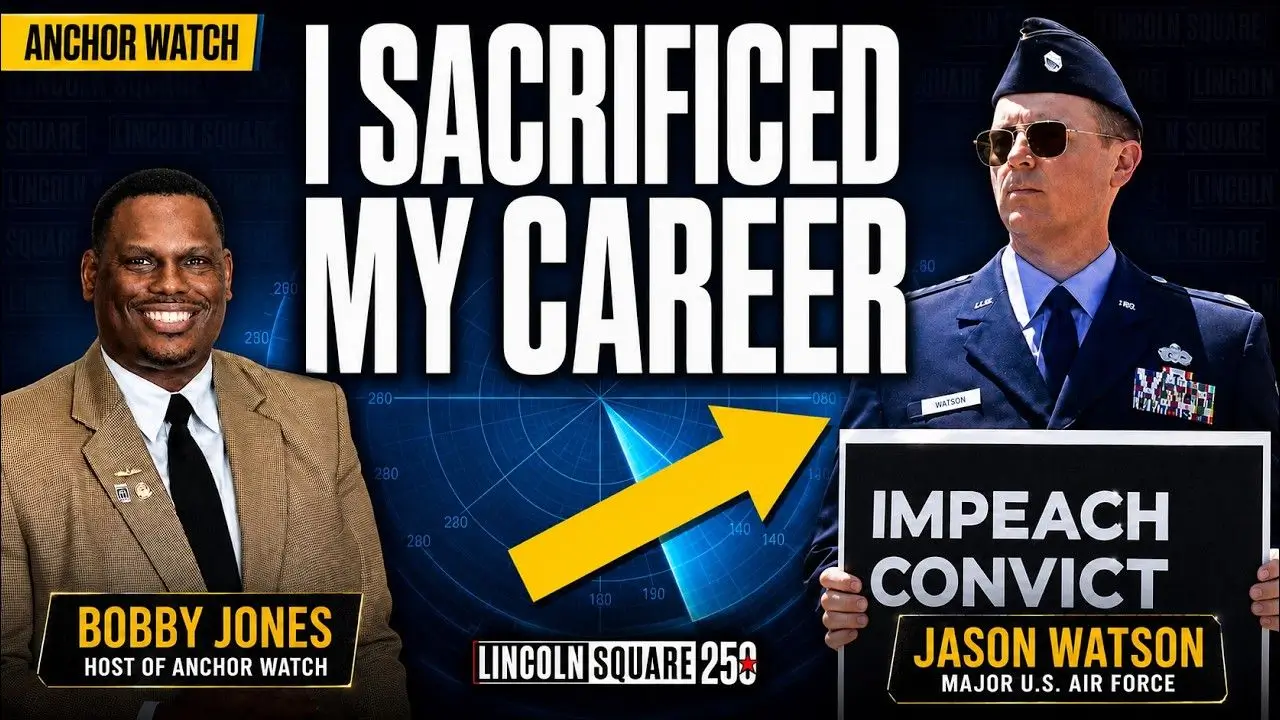
The name Major Watson has recently attracted significant public attention in connection with Major Jason P. Watson, an active-duty U.S. Air Force officer whose decision to speak publicly about constitutional and military matters has placed him at the center of a highly unusual controversy. His story is not simply about a military officer making headlines. It raises broader questions about military service, the responsibilities of active-duty personnel, freedom of expression, constitutional principles, and the difficult boundaries between personal conviction and military discipline.
According to a statement released by his attorneys on August 19, 2026, Watson has expressed concerns about what he believes are unconstitutional actions by the presidential administration, including his view that the war in Iran violates the Constitution he swore to defend. His lawyers say that he understood the professional consequences of speaking publicly but chose to do so because he believed the issue was serious enough to warrant public attention.
The circumstances surrounding Major Watson have become particularly notable because he remains an active-duty officer. That distinction matters. Military personnel operate under a different set of professional expectations from ordinary civilians, and public statements by commissioned officers can have consequences involving command authority, discipline, and military regulations. Watson’s case therefore sits at the intersection of an individual’s conscience and the institutional obligations of military service.
1. Who Is Major Watson?
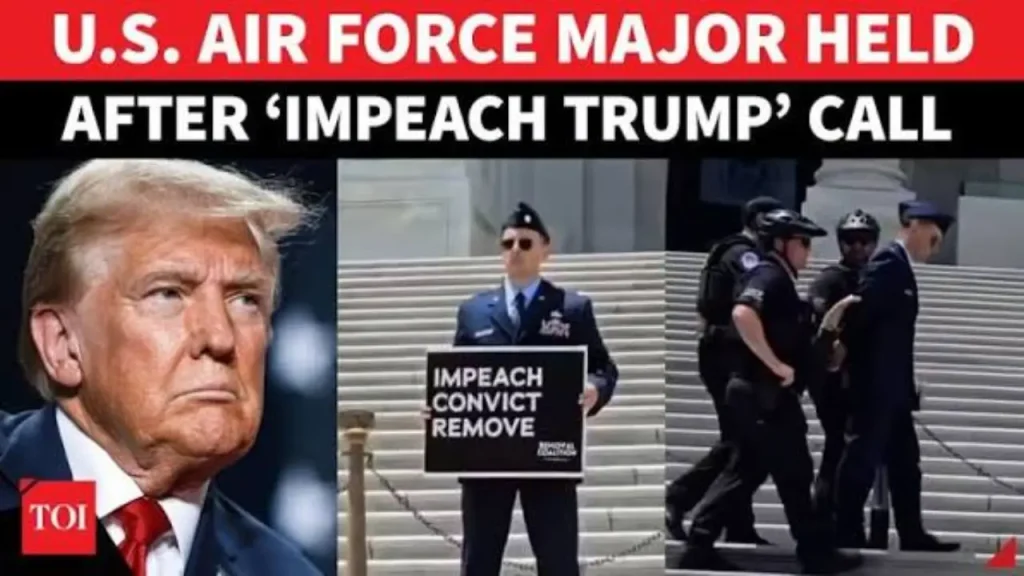
Major Jason P. Watson is an active-duty U.S. Air Force officer who has recently become publicly known because of his outspoken position regarding U.S. military action and constitutional authority. Public reporting in July 2026 identified him as an Air Force major who had been arrested on the steps of the U.S. Capitol after publicly calling for the impeachment of the president and vice president. His legal representatives subsequently said that he was not being held in confinement but had been restricted to Joint Base Anacostia-Bolling while an Air Force investigation remained open.
The details make Watson’s situation unusual. Military officers are expected to follow lawful orders and maintain professional discipline, but they are also citizens with personal beliefs and constitutional rights. The difficult question is what happens when an officer believes that government action conflicts with the Constitution or with the oath he took upon entering military service. Watson’s actions suggest that he interpreted his oath as creating a responsibility to speak when he believed fundamental constitutional principles were being violated.
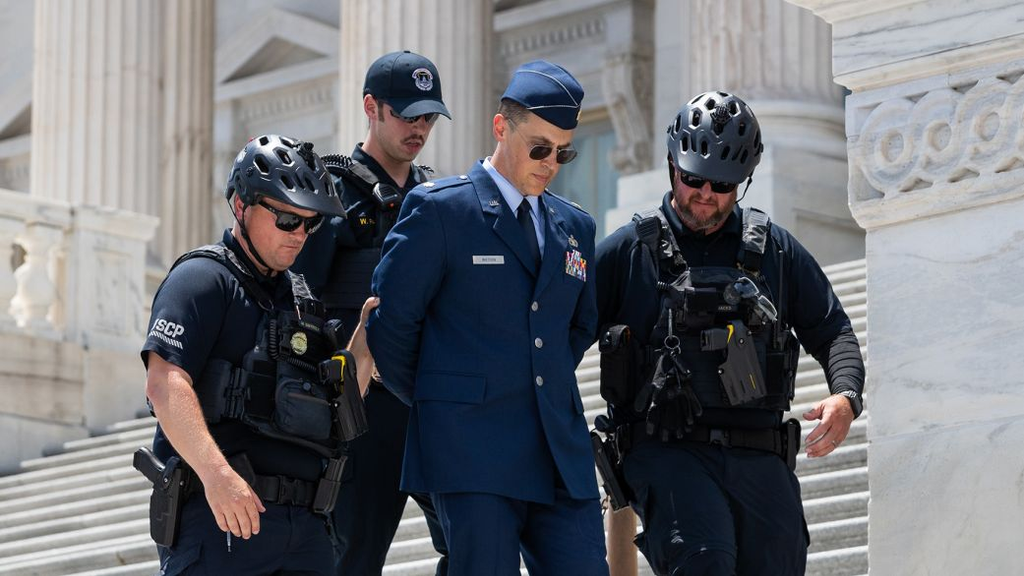
His public profile increased further in August 2026. A statement from his legal team dated August 19 said that Watson had recently spoken publicly in a televised interview about his concerns before returning to base and reporting for duty. His lawyers described his decision as one made at considerable personal and professional risk.
That description is significant because it highlights an important distinction: Major Watson’s story is not merely about political activism. It is also about the obligations attached to military rank. An enlisted service member, junior officer, senior officer, and general officer can face different professional circumstances when making public statements. As a commissioned officer, Watson’s position carries particular institutional weight.
2. Major Watson’s Military Service and Professional Identity
A major’s rank represents a substantial level of responsibility in the U.S. military. While the precise duties of an officer depend on branch, specialty, assignment, and command structure, a major is generally an experienced commissioned officer who may serve in operational, administrative, planning, or leadership roles. Reaching the rank requires years of service, professional development, and increasing responsibility.
For Watson, his military identity is especially relevant because his public statements have been made while he remains connected to active-duty service. That creates a complicated professional environment. Military officers are not simply private citizens when they are wearing the uniform or acting in an official capacity. Their conduct can affect perceptions of the service, relationships within the chain of command, and the broader credibility of military institutions.
| Element | Details |
|---|---|
| Focus Keyword | major watson |
| Full Name | Major Jason P. Watson |
| Branch | U.S. Air Force |
| Rank | Major |
| Status | Active-duty officer |
| Why He Is Notable | Publicly expressed constitutional concerns regarding U.S. military policy |
| Major Public Action | Called for the impeachment and removal of the president and vice president |
| Capitol Incident | Arrested on the steps of the U.S. Capitol in July 2026 |
| Military Investigation | An Air Force investigation was reported to be ongoing |
| Reported Location After Arrest | Joint Base Anacostia-Bolling, under restrictions rather than confinement |
| Position on Iran War | His attorneys said he believes the war in Iran violates the U.S. Constitution |
| Public Interview | Spoke publicly about his concerns in August 2026 |
| Key Issues | Military discipline, constitutional authority, freedom of expression, and civilian control of the military |
| Criminal Charges | His attorneys stated that Washington, D.C., criminal charges were declined for prosecution |
| Current Significance | His case raises questions about the balance between an active-duty officer’s constitutional beliefs and military obligations |
| Article Category | News |
Watson’s legal representatives have emphasized the personal consequences attached to his decision. Their August 19 statement described him as taking an extraordinary step despite what they characterized as significant personal and professional danger. The statement also said that he believed the U.S. war in Iran violated the Constitution.
That position places Watson in a very specific category of public controversy: a serving officer who is challenging the legality or constitutionality of government policy rather than a retired military figure commenting from outside the institution. Retired officers regularly participate in political debates, write books, appear on television, or criticize government decisions. An active-duty officer doing the same thing can face far more complicated questions concerning military regulations and professional conduct.
It is also worth separating verified facts from claims made by interested parties. Watson’s attorneys have publicly presented his actions as a principled defense of the Constitution. That is their characterization of the case. The underlying military investigation and any disciplinary proceedings are separate matters, and the available public information does not establish a final legal determination against Watson.
3. Why Major Watson’s Case Has Become Controversial
The central controversy surrounding Major Watson is the tension between freedom of expression and military discipline. In civilian life, Americans generally have broad rights to express political opinions and criticize government officials. Military service, however, comes with additional obligations. The armed forces depend on hierarchy, discipline, lawful command, and public confidence.
Watson’s public criticism therefore raises questions that go beyond his personal political views. If an active-duty officer publicly declares that a military operation is unconstitutional, how should the military respond? Does the statement constitute protected personal expression, an act of political advocacy, conduct inconsistent with military responsibilities, or some combination of these? Those questions can be legally and institutionally complex.
The July reporting adds another important element. Watson was arrested at the U.S. Capitol after publicly calling for the impeachment and removal of the president and vice president. His attorneys later stated that he was not in confinement, that he had been restricted to Joint Base Anacostia-Bolling, and that the Air Force investigation was still open. They also said that criminal charges in Washington, D.C., had been declined for prosecution.
An investigation is not the same thing as a finding of guilt. That distinction is essential when discussing Watson. An active investigation means authorities are examining the circumstances and determining whether any rules, laws, or military regulations were violated. Until a final determination is made, descriptions of the controversy should avoid presenting allegations or disputed interpretations as established facts.
The case has nevertheless attracted attention because of the symbolism involved. The U.S. Capitol is one of the most politically significant locations in the country, while Watson’s military rank makes his protest different from that of an ordinary civilian demonstrator. His appearance there placed military service, political expression, and constitutional arguments in the same public moment.
4. The Constitutional Questions Behind Major Watson’s Position
At the heart of Major Watson’s public position is the U.S. Constitution. His attorneys said that he believes the war in Iran violates constitutional requirements and that he acted because he felt compelled to alert the American public.
That argument touches on one of the oldest questions in American government: who has the constitutional authority to initiate and continue military action? The Constitution divides powers involving national defense and war among different branches of government. The president serves as commander in chief, while Congress possesses important powers relating to declaring war, funding military operations, and regulating the armed forces.
In practice, military operations can involve complicated legal frameworks, congressional authorizations, presidential authority, emergency powers, and international obligations. Determining whether a particular military action is constitutional is therefore rarely as simple as identifying one sentence in the Constitution. Courts, Congress, executive officials, military lawyers, academics, and constitutional scholars can disagree about the limits of presidential and congressional power.
Watson’s case is interesting precisely because his objection comes from within the armed forces. Military officers swear an oath to support and defend the Constitution, and that oath is central to American military culture. For Watson, his public actions appear to have been influenced by his interpretation of that obligation.
However, an officer’s constitutional concerns do not automatically eliminate the duty to follow lawful military orders. The distinction between a lawful order and an unlawful order is fundamental to military law. Determining that distinction requires careful legal analysis rather than simply relying on an individual’s personal disagreement with government policy.
That is why Watson’s case deserves careful attention rather than simplistic political labeling. Supporters may see him as a principled officer willing to risk his career for constitutional beliefs, while critics may argue that active-duty officers must preserve military discipline and remain within established legal and professional channels. Both perspectives point toward the larger institutional question: how should a military handle a member who sincerely believes national policy has crossed a constitutional line?
5. What Major Watson’s Story Could Mean for Military and Public Debate
Major Watson’s situation could have significance beyond the individual himself. Military institutions depend heavily on trust. Service members must trust their commanders, commanders must trust their subordinates, and civilians must trust that the armed forces remain subject to constitutional government. Public disputes involving active-duty officers can challenge those relationships because they force institutions to balance competing principles.
The case also illustrates why the distinction between personal conscience and institutional responsibility matters. A military officer can have strong political and constitutional beliefs. The difficult part is determining how those beliefs can be expressed while still respecting the professional rules governing active service.
Watson’s actions have also generated an unusual public conversation because his legal team has presented him as someone acting from conviction rather than personal gain. Their August 19 statement said he had accepted the risks associated with speaking out and had returned to base after his televised interview.
That does not settle the legal questions surrounding his conduct. Instead, it makes the eventual outcome more significant. If the investigation produces disciplinary action, observers will likely examine the rules applied to Watson and the reasoning behind the decision. If it does not, attention may shift toward the limits of permissible political expression by active-duty officers.
There is also a broader human dimension to the story. Military careers are built over years. Promotions, assignments, professional relationships, security responsibilities, and future opportunities can all depend on an officer’s standing within the institution. Choosing to make a controversial public statement can therefore involve much more than a single moment in front of a camera.
Major Watson’s story demonstrates how difficult it can be when personal conviction collides with professional duty. Regardless of one’s political position, the fundamental issues involved—constitutional government, military discipline, freedom of expression, and civilian control of the armed forces—are too important to reduce to a simple headline.
Conclusion
Major Watson, identified in current reporting as Air Force Major Jason P. Watson, has emerged as a notable figure in a controversy that combines military service, constitutional arguments, political expression, and questions about professional discipline. His decision to speak publicly about what he believes are unconstitutional government actions has placed him in an extraordinary position for an active-duty officer.
The facts currently available show that Watson has faced legal and military scrutiny following public actions at the U.S. Capitol. His attorneys say he believes the war in Iran violates the Constitution and that he chose to speak despite understanding the potential consequences. As of the latest public statement from his legal team, he had returned to base and was continuing to report for duty while the broader situation remained unresolved.
The most important lesson from the Major Watson controversy may be that constitutional questions rarely have simple answers. Military service requires discipline, while democratic government depends on constitutional accountability. Where those principles appear to collide, the process used to resolve the dispute matters as much as the personalities involved.
For now, Watson’s case remains an evolving story. Any final judgment about his conduct should wait for the relevant military and legal processes to reach their conclusions. What is already clear is that his actions have opened a serious national conversation about what an active-duty officer’s oath means when personal conviction and government policy appear to come into conflict.
Frequently Asked Questions About Major Watson
1. Who is Major Watson?
Major Watson refers to U.S. Air Force Major Jason P. Watson, an active-duty military officer who has recently gained public attention after speaking out about constitutional concerns surrounding U.S. military policy.
2. Why is Major Watson in the news?
He attracted attention after publicly calling for the impeachment and removal of the president and vice president and subsequently speaking publicly about his concerns regarding U.S. military action.
3. What does Major Watson believe about the war in Iran?
According to a statement from his attorneys, Watson believes that the war in Iran violates the U.S. Constitution. His lawyers said this belief contributed to his decision to speak publicly.
4. Was Major Watson arrested?
Yes. Public reporting in July 2026 stated that Watson was arrested on the steps of the U.S. Capitol after publicly calling for the impeachment, conviction, and removal of the president and vice president.
5. Is Major Watson currently in jail?
According to his attorneys’ July statement, Watson was not in confinement. He had instead been restricted to Joint Base Anacostia-Bolling while the Air Force investigation remained open.
6. Has Major Watson been found guilty of a crime?
The available reporting does not establish a final criminal conviction against him. His attorneys stated that Washington, D.C., criminal charges had been declined for prosecution, while an Air Force investigation remained open.
7. Why is an active-duty officer’s political speech complicated?
Military personnel have constitutional rights, but active-duty service also involves specific professional obligations and rules designed to maintain discipline, good order, and effective command. Political expression by a serving officer can therefore raise issues that would not apply in exactly the same way to a private citizen.
8. What happened when Major Watson spoke publicly in August 2026?
According to his legal representatives, Watson participated in a televised interview discussing his concerns. The statement dated August 19 said he subsequently returned to his base and reported for duty.
9. What is the main constitutional issue in the Major Watson controversy?
A major issue concerns the constitutional authority surrounding military action and the division of war powers between Congress and the president. Watson’s stated position is that the U.S. war in Iran violates the Constitution.
10. What happens next for Major Watson?
The situation remains subject to military and legal processes. Because the investigation has not necessarily reached a final conclusion, additional official decisions or legal developments could change the picture. The most responsible approach is to distinguish confirmed developments from claims made by Watson, his attorneys, or other interested parties
