

Introduction
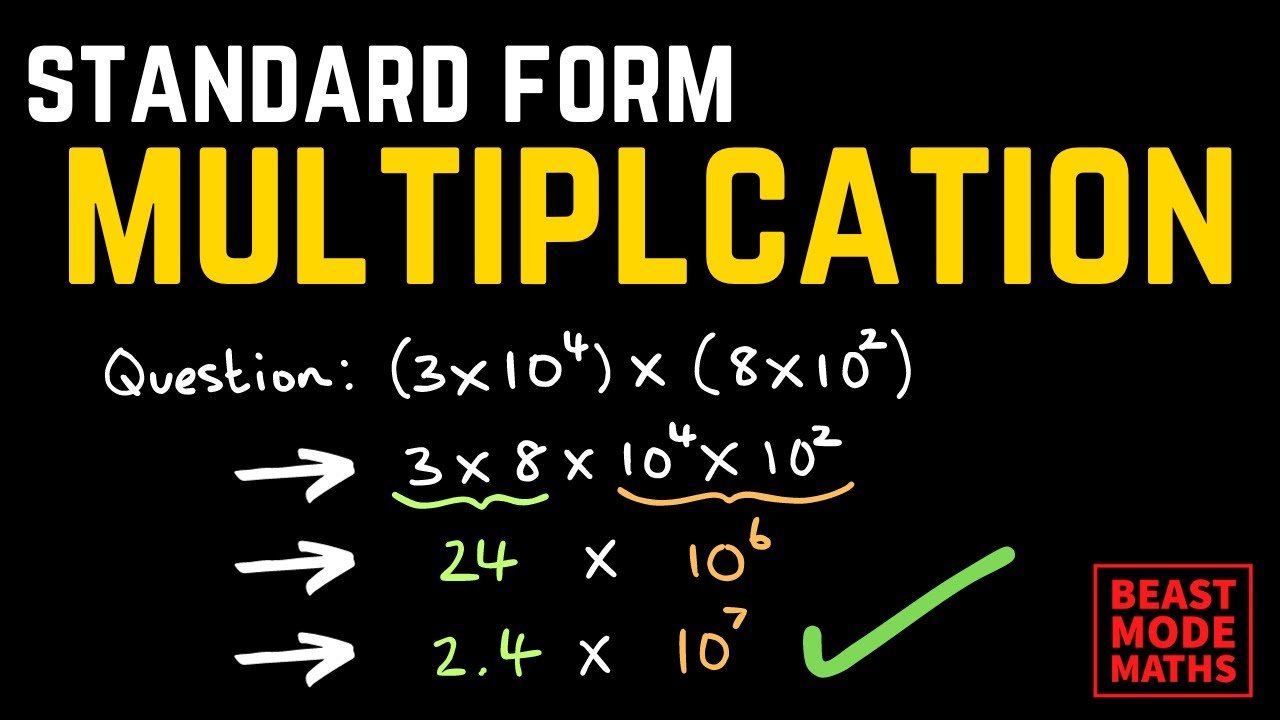
The term “standard form” is widely used in mathematics, science, and everyday problem-solving. However, many students and learners are not fully aware of the precise standard form meaning and its applications. Understanding standard form is essential for simplifying calculations, expressing numbers clearly, and applying scientific notation in various fields.
This comprehensive guide explores what standard form is, its types, uses in mathematics and science, step-by-step examples, and tips for mastering this fundamental concept. By the end, you will have a solid understanding of standard form and how it can simplify numerical expressions.
What Is Standard Form?
At its core, standard form refers to a way of writing numbers, equations, or expressions in a simplified and universally recognized format. The exact standard form can vary depending on the context—mathematics, science, or business—but the central idea remains: presenting information in a clear, organized, and consistent way.
Standard Form in Mathematics
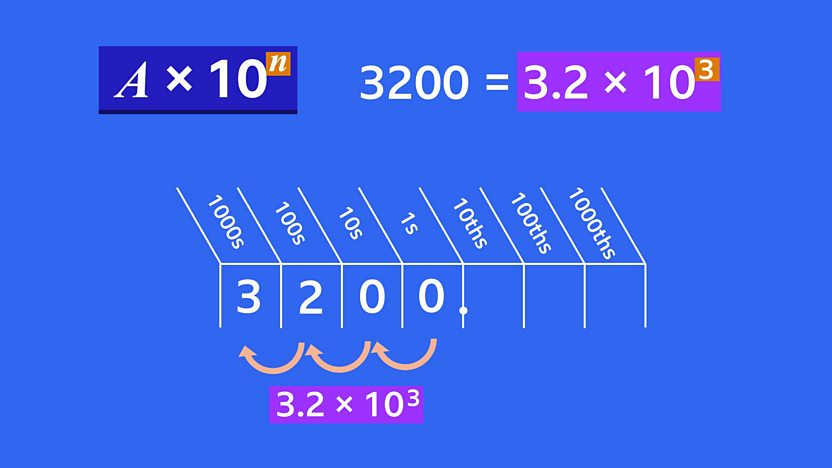
In mathematics, standard form is commonly used to write very large or very small numbers in a more manageable way. For example:
- 5,000 can be written as 5 × 10³ in standard form
- 0.004 can be written as 4 × 10⁻³
This method makes calculations easier and reduces errors when dealing with extreme numbers.
Standard Form in Algebra
In algebra, standard form often refers to writing equations in a specific order. For example:
- A linear equation in standard form is written as Ax + By = C
- A quadratic equation in standard form is written as ax² + bx + c = 0
Organizing equations in standard form helps identify important features such as intercepts, slope, or the discriminant in quadratic equations.
Standard Form in Scientific Notation
In science, standard form is closely linked to scientific notation, which allows scientists and engineers to handle very large or small numbers efficiently. For example:
- The mass of Earth: 5,972,000,000,000,000,000,000,000 kg = 5.972 × 10²⁴ kg
- The mass of an electron: 0.000000000000000000000000000000911 kg = 9.11 × 10⁻³¹ kg
This type of standard form simplifies communication and ensures consistency in scientific writing.
Why Standard Form Is Important
Understanding standard form is crucial for several reasons:
Simplifies Large and Small Numbers
Dealing with extremely large or small numbers can be confusing. Using standard form makes numbers easier to read, write, and calculate.
Reduces Calculation Errors
In fields like engineering, physics, and chemistry, numbers often have many zeros. Writing them in standard form helps avoid mistakes during calculations.
Enhances Communication
Whether in math problems, scientific research, or financial reporting, standard_form ensures that numbers and equations are communicated clearly and consistently.
Improves Learning and Problem Solving
Students who understand standard_form can quickly interpret and manipulate numbers, making complex problems easier to solve.
Different Types of Standard_Form
The term standard_form can have multiple interpretations depending on the context. Here are the most common types:
1. Standard Form for Numbers
This involves expressing numbers as a product of a number between 1 and 10 and a power of 10. Examples:
- 2500 = 2.5 × 10³
- 0.00036 = 3.6 × 10⁻⁴
2. Standard_Form for Linear Equations
Linear equations can be written in standard_form as:
Ax + By = C
- Example: 2x + 3y = 6
- Example: -4x + 5y = 10
This format makes it easier to identify the slope and intercepts for graphing purposes.
3. Standard_Form for Quadratic Equations
A quadratic equation in standard_form follows:
ax² + bx + c = 0
- Example: 2x² + 3x – 5 = 0
Writing equations in this way helps with solving them using factoring, completing the square, or the quadratic formula.
4. Standard_Form in Scientific Notation
Used in science and engineering, this type of standard_form expresses very large or very small numbers with powers of 10:
- Speed of light: 299,792,458 m/s = 2.99792458 × 10⁸ m/s
- Planck’s constant: 0.0000000000000000000000000000000000006626 Js = 6.626 × 10⁻³⁴ Js
How to Convert Numbers into Standard_Form
Learning to convert numbers into standard_form is essential for students and professionals alike. Here is a step-by-step guide:
Step 1: Identify the Significant Figures
Find the digits that carry meaning. For example, in 12,500, the significant figures are 1, 2, and 5.
Step 2: Place the Decimal Point After the First Significant Digit
Move the decimal point so that only one non-zero digit is before it.
- 12,500 → 1.25
Step 3: Count How Many Places the Decimal Moved
- 12,500 → 1.25 × 10³ (decimal moved 3 places to the left)
- 0.00436 → 4.36 × 10⁻³ (decimal moved 3 places to the right)
Step 4: Write in Standard_Form
Combine the number between 1 and 10 with the power of 10:
- Large number: 56,000 → 5.6 × 10⁴
- Small number: 0.00072 → 7.2 × 10⁻⁴
Applications of Standar_ Form
The standard_form has many applications across different fields.
In Mathematics
- Simplifying large or small numbers
- Writing linear and quadratic equations
- Comparing and ordering numbers efficiently
In Science
- Expressing astronomical distances (e.g., distance to the sun)
- Recording measurements in chemistry and physics
- Handling very small quantities like atoms or molecules
In Finance
- Representing large financial figures clearly, such as national budgets or corporate revenues
- Simplifying reports for analysis
In Engineering
- Expressing measurements for precision instruments
- Simplifying calculations for large-scale projects
Advantages of Using Standard_Form
Using standard_form provides several benefits:
- Clarity: Reduces confusion when dealing with large or small numbers
- Efficiency: Simplifies calculations and data analysis
- Consistency: Provides a uniform way of expressing numbers and equations
- Problem Solving: Helps identify patterns and solutions more quickly
Common Mistakes When Using Standard_Form
Even experienced learners make mistakes when using standard_form. Here are common pitfalls:
- Misplacing the decimal point when converting numbers
- Forgetting the negative sign for small numbers (e.g., 0.0005 = 5 × 10⁻⁴, not 10⁴)
- Confusing standard form for equations with scientific notation
- Writing more than one digit before the decimal in scientific notation
Avoiding these mistakes ensures accuracy in calculations and reporting.
Tips to Master Standard_Form
Here are some practical tips to master standard_form:
- Practice converting both large and small numbers
- Memorize the powers of 10 and their applications
- Work on linear and quadratic equations in standard form
- Solve real-life problems using scientific notation
- Check your answers by converting back to the original number
Consistent practice will make working with standard_form intuitive and easy.
Conclusion
The standard_form is a fundamental concept in mathematics, science, engineering, and finance. Whether expressing large numbers, solving equations, or simplifying calculations, standard_form provides clarity, efficiency, and consistency.
By understanding the standard_form meaning, types, and applications, learners and professionals can improve their problem-solving skills and communicate numerical information more effectively. From linear equations to scientific notation, mastering standard_form is essential for success in both academic and professional settings.
Understanding standard_form equips individuals with a versatile tool to tackle complex numbers, equations, and real-world problems with confidence.
