


Introduction
Choosing a university is rarely just about finding a list of majors or comparing tuition figures. For many students, the right college is the place where academic ambitions, personal values, relationships, and future plans come together. Milligan University offers that kind of experience through a distinctive combination of Christian faith, liberal arts education, professional preparation, athletics, and close-knit campus life.
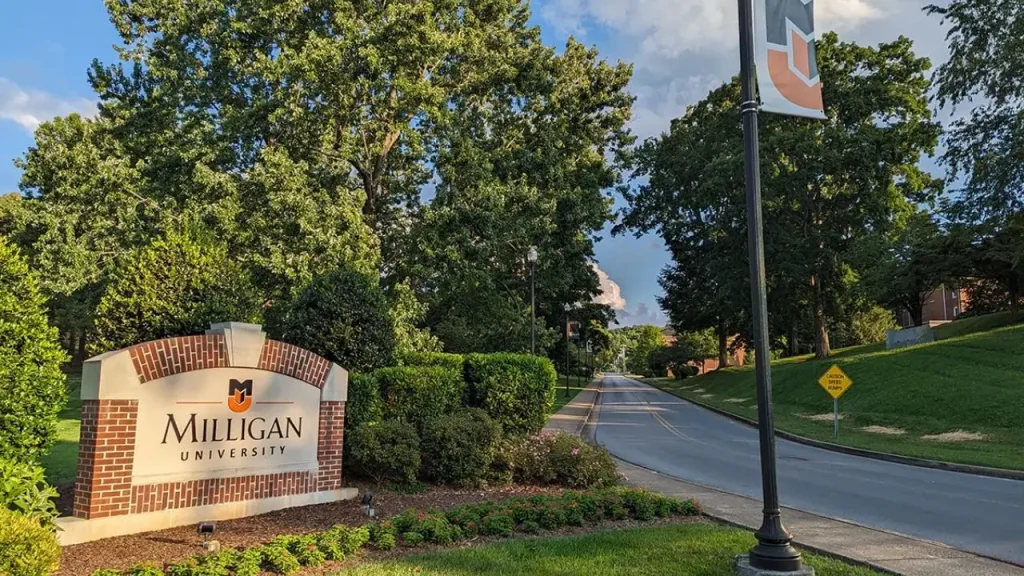
Located in Milligan, Tennessee, in the hills of northeastern Tennessee, the university has a history stretching back to 1866. What began as the Buffalo Male and Female Institute eventually developed into Milligan College and later became Milligan University. Today, the institution presents itself as a Christ-centered university with undergraduate, graduate, and seminary programs, while maintaining the personal atmosphere associated with a smaller institution.
For students who want professors who know them personally, opportunities to participate outside the classroom, and an educational environment where Christian faith is part of the academic experience, Milligan can be an intriguing choice. Its identity is particularly clear in the way it combines traditional liberal arts learning with career preparation and a strong emphasis on service.
1. The History and Identity of Milligan University
Milligan University’s story begins in the 19th century. On December 10, 1866, Wilson G. Barker established the Buffalo Male and Female Institute in what is now northeastern Tennessee. Josephus Hopwood later assumed leadership of the school, and in 1881 he announced its elevation to collegiate status and the name Milligan College. The institution received its official college charter in 1882. The name honored Professor Robert Milligan, a Christian scholar associated with Kentucky University.
That history helps explain why the university’s identity today is more than simply a modern Christian label attached to a conventional college. From its early development, Milligan was shaped around the idea that education should form both the intellect and the character. Its historic motto, “Christian Education — the Hope of the World,” reflects an educational philosophy that connects learning with responsibility, faith, and service.

Milligan officially operates as a Christian liberal arts university. Its stated mission emphasizes educating students to become servant-leaders, and its academic environment is intentionally connected to a biblical worldview. Students are therefore not simply encouraged to accumulate information; they are encouraged to think about how knowledge relates to values, vocation, community, and responsibility.
This approach can be particularly appealing to students who want their religious convictions to be part of their college experience rather than something kept separate from academic life. At the same time, prospective students should recognize that Milligan’s Christian identity is central to the institution. Students who prefer a completely secular academic environment may find that its philosophy differs significantly from what they would encounter at a public university.
2. Academics, Majors, and the Milligan Learning Experience
One of Milligan University’s strongest features is the breadth of academic choices available within a relatively personal university setting. The institution currently offers more than 100 majors, minors, pre-professional degrees, and concentrations. That range allows students to pursue traditional liberal arts subjects alongside career-oriented fields. The university also reports a 9:1 student-faculty ratio, reinforcing its emphasis on personal interaction between students and professors.
The liberal arts foundation is particularly visible in areas such as arts and humanities. Students can study subjects including art, graphic design, English, history, religious studies, music, musical theatre, and theatre arts. These programs are not presented simply as theoretical disciplines. Milligan emphasizes opportunities for students to perform, create, collaborate, exhibit work, and develop practical skills alongside their academic studies.
| Category | Details |
|---|---|
| University Name | Milligan University |
| Category | Education / University |
| Location | Milligan, Tennessee, USA |
| Founded | 1866 |
| Institution Type | Private Christian University |
| Religious Identity | Christ-centered / Christian |
| Academic Focus | Liberal arts, professional programs, graduate education, and seminary studies |
| Student-Faculty Ratio | Approximately 9:1 |
| Academic Offerings | 100+ majors, minors, pre-professional degrees, and concentrations |
| Athletics | NAIA and Appalachian Athletic Conference |
| Campus Life | Student organizations, residence life, spiritual activities, arts, recreation, and athletics |
| Financial Aid | Scholarships, grants, and need-based financial assistance |
| Graduate Education | Available |
| Seminary | Emmanuel Christian Seminary at Milligan |
| Known For | Christian education, personal faculty attention, servant leadership, academics, and athletics |
| Best For | Students seeking a close-knit Christian university with broad academic and extracurricular opportunitie |
For example, the graphic design program combines creative development with areas such as digital illustration, typography, web and mobile design, package design, and motion graphics. Students can also gain practical experience through client-based work and the university’s student-run media agency. Theatre students have opportunities to explore both performance and behind-the-scenes production, while music students can participate in concerts, recitals, and other performances.
Milligan also offers academic pathways beyond the traditional undergraduate experience. Graduate programs and Emmanuel Christian Seminary operate within the university’s broader educational structure, giving students opportunities to continue their education or prepare for ministry and professional leadership. The university describes its graduate offerings as designed for students seeking greater specialization, professional competence, or leadership development.
A Personal Approach to Learning
A smaller student-faculty ratio can make a meaningful difference in the college experience. Instead of feeling anonymous in large lecture halls, students may have more opportunities to ask questions, receive feedback, discuss ideas, and develop relationships with faculty members. Milligan’s academic model deliberately highlights this personal connection.
The university also provides student-success resources, career planning, internship and summer-job assistance, and other forms of academic support. These services are useful because college success depends on more than simply attending classes. Students need guidance when choosing courses, preparing resumes, finding internships, considering graduate school, or dealing with academic challenges. Milligan’s academic offices specifically identify career development, mentoring, early-alert support, and disability services among its student resources.
3. Campus Life, Community, and the Student Experience
Life at Milligan University extends well beyond the classroom. The campus experience is designed around community, with student organizations, residence life, athletics, spiritual activities, and social events providing numerous ways for students to become involved. The university says that more than 40 service, honorary, professional, and campus-life organizations encourage students to participate and develop servant leadership.
That emphasis on involvement is significant at a university of Milligan’s scale. Students do not have to be passive observers of campus life. Someone interested in service can participate in community-focused organizations, while another student might become involved in music, theatre, student activities, athletics, or professional organizations. These experiences can become just as memorable as classroom work.
Spiritual life is another major part of the Milligan experience. Because the university identifies itself as Christ-centered, faith is integrated into campus culture rather than being treated as an occasional extracurricular activity. Chapel, ministry opportunities, spiritual formation, and Christian community are among the experiences highlighted by the institution.
For students who want a college environment where faith and education overlap, this can be one of Milligan’s most attractive characteristics. Students can explore questions of purpose, ethics, leadership, and service while developing academic and professional skills. The goal is not simply to prepare graduates for employment but to encourage them to think about how their future careers can contribute to other people and communities.
Housing and Everyday Campus Life
Residential life also plays an important role in creating the university’s community atmosphere. Students have access to residence halls and other housing options, while married and graduate students can use independent housing arrangements associated with campus life.
The university describes its campus as a peaceful setting in northeastern Tennessee, with spaces for recreation, arts and culture, athletics, and outdoor activities. That environment can be especially attractive to students who prefer a quieter campus setting rather than the density and constant activity of a major metropolitan university.
4. Athletics and Opportunities Beyond the Classroom
Athletics are another prominent part of Milligan University’s identity. The university competes in the National Association of Intercollegiate Athletics, or NAIA, and participates in the Appalachian Athletic Conference. Its 2025–26 catalog lists 31 intercollegiate sports, reflecting a substantial athletic program for a university of its size.
Milligan’s sports offerings cover a wide range of interests. Teams and programs include basketball, baseball, soccer, swimming, tennis, cycling, cross country, track and field, golf, bowling, volleyball, triathlon, and other sports. This variety gives students with different athletic backgrounds opportunities to compete at the collegiate level while remaining part of a broader academic community.
The university’s athletic achievements also stand out. Milligan reports numerous All-American and All-Conference athletes, along with national championships in sports including track and field, women’s cross country, swimming, and cycling. Its combination of athletic competition and academic expectations is an important part of the school’s student-athlete culture.
Academic achievement among athletes is particularly notable. In 2023, Milligan reported that its student-athletes had earned 29 College Sports Communicators Academic All-America selections since 2020, ranking the university 20th nationally across collegiate athletics at that point. The school also reported a record 15 Academic All-America selections during the 2022–23 academic year.
This balance matters because college athletics can consume a large portion of a student’s schedule. A university that values both competition and academics gives athletes a better opportunity to develop discipline, teamwork, time management, and leadership skills that can remain valuable after graduation.
5. Admissions, Financial Aid, Career Preparation, and Who Milligan May Suit Best
For prospective students, affordability is naturally one of the biggest questions. Milligan offers competitive scholarships, grants, and need-based financial aid, and the university states that 99 percent of its students receive some form of financial assistance. Students and families can also use the institution’s Net Price Calculator to estimate what attendance may cost after aid.
Financial aid, however, should always be evaluated on an individual basis. The advertised availability of scholarships does not mean every student will receive the same package. Prospective students should compare the total estimated cost of attendance with grants, scholarships, loans, work opportunities, housing expenses, and other costs before making a final decision. A university can be an excellent academic fit while still requiring careful financial planning.
Career preparation is another area where Milligan tries to connect education with life after graduation. Its academic support structure includes career planning and assessments, internship resources, summer-job resources, and employment tools such as Handshake. These services are designed to help students move from college coursework toward professional opportunities.
The university’s professional orientation can also be seen in recent program development. In July 2026, Milligan announced that its undergraduate social work program had received initial accreditation from the Council on Social Work Education Board of Accreditation, with the initial status covering eight years. The program prepares students for ethical and impactful social-work practice while retaining the university’s servant-leadership emphasis.
Who Should Consider Milligan University?
Milligan may be particularly suitable for students who want a Christian college experience without giving up broad academic options. Students interested in liberal arts, professional programs, the arts, ministry, healthcare-related fields, business, education, social sciences, or other disciplines can explore multiple pathways within the university.
It may also appeal to students who value personal relationships with professors and a strong sense of campus community. A student who wants a huge university with tens of thousands of undergraduates and an extensive urban campus may prefer a different environment. Milligan’s appeal lies more in personal attention, community involvement, faith-based education, and a campus where students can become known rather than remaining anonymous.
The best way to determine whether the university is a good fit is to look beyond brochures and rankings. Prospective students should consider the institution’s Christian philosophy, academic programs, campus size, athletics, housing, financial aid, location, and career goals. Visiting campus can also provide useful insight into whether the atmosphere feels comfortable and whether the university’s educational philosophy matches personal expectations.
Conclusion
Milligan University offers a distinctive college experience built around Christian faith, liberal arts education, personal attention, service, and community. Its long history, dating to 1866, gives the institution a strong sense of identity, while its modern academic programs and professional pathways provide students with opportunities to prepare for a changing workforce.
What makes Milligan especially interesting is the way its different pieces fit together. Academics are connected to personal mentorship. Athletics are connected to scholarship. Campus life is connected to service. Professional preparation is connected to questions of purpose and leadership. For the right student, that combination can create an educational experience that reaches well beyond earning a degree.
Ultimately, choosing Milligan University is a decision about fit. Students who want a Christ-centered environment, close faculty relationships, active campus participation, competitive athletics, and a broad liberal arts foundation may find the university worth serious consideration. Those priorities should be weighed alongside cost, program availability, location, and personal career plans before making a final choice.
Frequently Asked Questions About Milligan University
1. Where is Milligan University located?
Milligan University is located in Milligan, Tennessee, in northeastern Tennessee. Its campus address is in the Milligan community near Johnson City and the broader Tri-Cities region. The university describes its setting as a peaceful location surrounded by the hills of northeastern Tennessee.
2. Is Milligan University a Christian university?
Yes. Milligan University is a Christ-centered Christian university. Its educational philosophy incorporates a biblical worldview, and faith, spiritual formation, chapel, and service are significant parts of campus life.
3. When was Milligan University founded?
Milligan traces its beginnings to 1866, when Wilson G. Barker established the Buffalo Male and Female Institute. The school later became Milligan College and eventually Milligan University.
4. What majors does Milligan University offer?
Milligan offers more than 100 majors, minors, pre-professional degrees, and concentrations. Academic areas include arts and humanities, business, sciences, professional programs, and other fields. Students can also explore graduate and seminary programs.
5. Does Milligan University have a strong athletics program?
Yes. Milligan competes in the NAIA and Appalachian Athletic Conference and offers dozens of intercollegiate sports. The university has also produced national champions, All-Americans, and Academic All-Americans.
6. What is the student-faculty ratio at Milligan University?
Milligan reports a 9:1 student-faculty ratio. The university presents this as part of its commitment to personal attention and close relationships between students and professors.
7. Does Milligan University offer financial aid?
Yes. Milligan provides competitive scholarships and grants as well as need-based financial aid. The university states that 99 percent of its students receive financial assistance. Students can also use its Net Price Calculator to estimate potential costs.
8. Does Milligan University offer graduate programs?
Yes. Milligan offers graduate education as well as undergraduate programs and seminary education through Emmanuel Christian Seminary at Milligan. Graduate options are intended to support professional specialization, leadership development, and ministry preparation.
9. What is campus life like at Milligan University?
Campus life includes residence halls, student organizations, athletics, spiritual activities, arts and cultural events, recreation, and service opportunities. The university lists more than 40 service, honorary, professional, and campus-life organizations.
10. Who is Milligan University best suited for?
Milligan may be a strong fit for students seeking a Christian liberal arts education with personal faculty attention, active campus involvement, competitive athletics, and opportunities for professional preparation. Students should also consider whether the university’s faith-based environment, size, location, academic offerings, and cost match their individual goals
