

Introduction
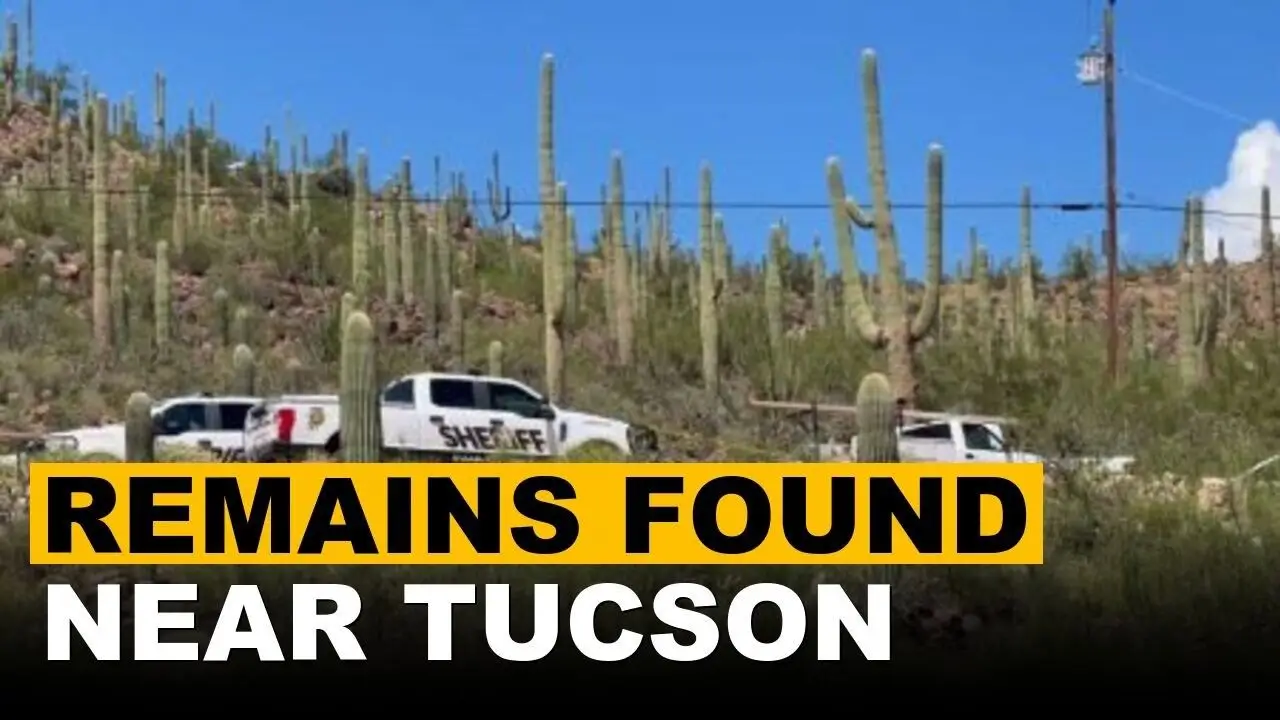
The tucson desert human remains findings have attracted widespread attention after human remains were discovered in a desert area southwest of Tucson, Arizona, in August 2026. The discovery immediately generated questions because it occurred while authorities were continuing to investigate the disappearance of Nancy Guthrie, the 84-year-old mother of Today show co-anchor Savannah Guthrie. Yet investigators have stressed that there is currently no indication that the newly discovered remains are connected to her case.
The circumstances surrounding the discovery also highlight a much larger reality of southern Arizona. The Sonoran Desert is enormous, rugged and dangerous, and human remains are recovered there for a variety of reasons. Some cases involve migrants who died while attempting to cross remote terrain; others involve missing people, accidental deaths, historical burials or remains that have been in the landscape for years. Understanding that wider context is essential before drawing conclusions from a single discovery.
What Happened When the Human Remains Were Discovered
According to authorities, Pima County Sheriff’s Department Search and Rescue deputies responded to reports of human remains in a desert area near West Ajo Way and South La Cholla Boulevard. Investigators said the remains appeared to have been at the location for an extended period of time. The discovery was publicly reported on August 17, 2026, and quickly became the subject of intense public interest because of the ongoing Nancy Guthrie investigation.
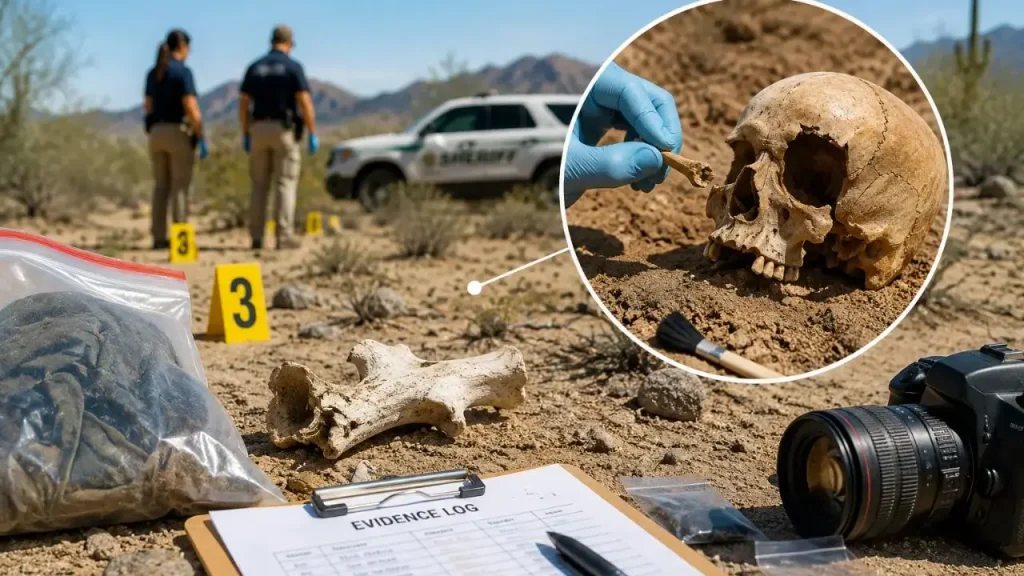
The location is roughly 15 miles from Guthrie’s Tucson home. That geographical connection was enough to prompt speculation, particularly because her disappearance has remained unresolved. However, proximity alone does not establish a connection between two cases. Authorities have specifically said that there is no indication at this stage that the remains are connected to Guthrie’s disappearance. That distinction is crucial because identifying remains requires forensic examination rather than assumptions based on location or timing.
Why the Location Matters
Southern Arizona’s desert landscape presents unusual challenges for investigators. Remote areas can contain washes, rocky terrain, thick vegetation and long stretches with little human activity. A person may remain undiscovered for a considerable period before hikers, search teams, construction crews or other people happen upon evidence.
The desert also has a long record of unidentified human remains. Humane Borders, working with information from the Pima County Office of the Medical Examiner, maintains a database documenting migrant deaths in Arizona. Its current information indicates that many remains recovered recently may belong to people who died months or even years earlier. The organization also reports that a substantial number of deaths may never result in recovered remains because of the enormous size and isolation of the desert.
| Topic | Details |
|---|---|
| Location | Tucson, Arizona |
| Discovery | Human remains found in desert |
| Area | West Ajo Way & S. La Cholla Blvd. |
| County | Pima County |
| Nancy Guthrie Link | No confirmed connection |
| Investigation | Ongoing |
| Identification | Forensic testing |
| Main Issue | Determining identity and cause of death |
That background helps explain why investigators generally approach every discovery as an individual forensic case. A body found in the desert does not automatically point to a crime, a recent disappearance or a particular missing person. The physical evidence must be examined before investigators can determine what happened.
Why the Nancy Guthrie Connection Became a Major Question
The discovery received unusual attention because Nancy Guthrie had been missing for months. Guthrie, 84, was reported missing on February 1, 2026, after last being seen on January 31. Her daughter Savannah Guthrie has remained publicly involved in efforts to find answers, while authorities have continued investigating the circumstances surrounding the disappearance.
The discovery of unidentified remains naturally raised the question of whether they could provide an answer in that case. Pima County Chief Medical Examiner Greg Hess has explained that unidentified remains arriving at his office are examined carefully, and that the question of whether they could belong to Guthrie is an obvious one given the circumstances. Yet investigators have not publicly established such a connection, and officials have stated that there is currently no indication linking the remains to her disappearance.
Why Identification Takes Time
Identifying human remains is not always immediate, particularly when remains have been exposed to the environment for a long period. Investigators may need to assess bones, dental information, medical records, DNA and other evidence before reaching a reliable identification.
The condition of remains can also influence what information is available. A body recovered soon after death may provide investigators with fingerprints, facial characteristics and other readily usable evidence. Skeletonized or badly decomposed remains can require a different forensic approach. In those situations, specialists may rely heavily on DNA and dental comparisons.
This is why authorities are cautious about announcing an identity before the evidence has been properly reviewed. A premature identification could cause enormous harm to families and potentially interfere with an investigation.
The Larger Pattern of Human Remains in the Tucson Desert
The latest discovery cannot be understood separately from the long history of deaths in the Arizona desert. The region has become one of the most significant locations in the United States for recovering the remains of people who died while crossing remote areas near the U.S.-Mexico border. Extreme heat, dehydration, exposure and difficult terrain can turn an attempted journey into a fatal emergency.
Humane Borders’ current database records thousands of migrant deaths in Arizona since the early 1980s. The organization says medical examiners in Pima and Maricopa counties determine which recovered remains are classified as undocumented border crossers and notes that many deceased people remain unidentified. As of August 2026, its information lists 1,645 unidentified decedents.
The scale of the landscape makes the problem even more difficult. Arizona’s border with Mexico stretches for hundreds of miles, while remote desert areas extend far north of the international boundary. Search teams can spend days reaching places that are difficult to access by vehicle or even on foot.
Why Some Remains Are Found Years Later
A major misconception about desert discoveries is that a body found today must represent a recent death. That is not necessarily true. Remains can stay hidden for long periods because of terrain, vegetation, weather conditions and the lack of regular human activity.
Humane Borders specifically warns that many remains recovered in recent searches belong to people who died from one year to many years earlier. Its database records a post-mortem interval when that information is available, allowing researchers to distinguish between the date remains were discovered and the estimated period since death.
This distinction matters in the Tucson case. Investigators’ statement that the remains appeared to have been at the location for an extended period does not by itself establish when the person died. More detailed forensic analysis is needed before such a conclusion can be made.
How Investigators Determine Who the Remains Belonged To
Once human remains are discovered, investigators typically begin by documenting the scene carefully. The location, position of the remains and surrounding objects can all provide useful information. Even apparently minor items may become important later when investigators attempt to establish identity or reconstruct events.
The remains can then be examined by forensic specialists. Depending on their condition, investigators may look at skeletal characteristics, dental evidence, personal effects and DNA. Medical examiner records can also be compared against missing-person reports. In cases where DNA is available, investigators may compare it with samples from relatives or existing databases, subject to applicable procedures and legal requirements.
Identification is only one part of the process. Authorities also want to determine how the person died and whether the circumstances suggest an accident, natural death, exposure, homicide or another explanation. The absence of obvious signs of violence does not automatically resolve the case, which is why forensic examination remains essential.
Connecting Unidentified Remains With Missing Persons
One of the most valuable tools available to investigators is comparison with missing-person records. A person may have been reported missing in one jurisdiction while their remains are discovered hundreds of miles away. That can create a difficult investigative puzzle, especially when the individual had no identification with them.
DNA can provide an important breakthrough. Relatives may voluntarily provide comparison samples, allowing investigators to determine whether unidentified remains belong to a particular family. Dental records and distinctive medical information can also be useful when available.
Cases involving unidentified remains can remain open for years. Advances in forensic technology sometimes allow investigators to solve cases that initially appeared impossible. A discovery that produces few answers immediately may still become important later when new information, improved testing or a newly reported missing person provides a potential match.
Other Tucson-Area Discoveries Show Why Context Matters
The August 2026 discovery is not the first time human remains have been found in the Tucson area under circumstances that initially raised questions. In June 2025, construction workers excavating near Twin Peaks and Silverbell roads northwest of Tucson discovered human remains during a road-widening project. Authorities initially suspended construction while detectives investigated.
The eventual explanation was very different from what the initial discovery might have suggested. Investigators determined that the remains belonged to a person who had been legally buried on the private property by family members in 1976. The grave had originally been marked, but the markings were lost over time and the precise location could no longer be identified. Authorities found no suspicious circumstances and no indication of foul play, and the remains were returned to the family.
Another example came in October 2025, when human remains discovered in a desert area near Swan and Sunrise in the Catalina Foothills were identified as belonging to 77-year-old Thomas Reuter, who had been reported missing about a year earlier. His case illustrates how a desert discovery can eventually provide answers to a family even when the initial circumstances are unclear. At the time of reporting, however, the circumstances of Reuter’s death remained under investigation.
These cases demonstrate why investigators avoid rushing to conclusions. Human remains can represent an unresolved missing-person case, a historical burial, a migrant death, an accident or something more serious. Each discovery has to be evaluated according to its own evidence.
What the Tucson Desert Findings Could Reveal Next
The most significant developments will likely come from forensic examination and official identification efforts. Investigators may determine an approximate age, sex, identity and time since death, although the amount of information available depends heavily on the condition of the remains.
If an identity is established, investigators can compare the circumstances surrounding the person’s disappearance with the location where the remains were found. If no match is immediately available, the case may enter the broader unidentified-remains system, where it can potentially be compared with future missing-person reports or new forensic information.
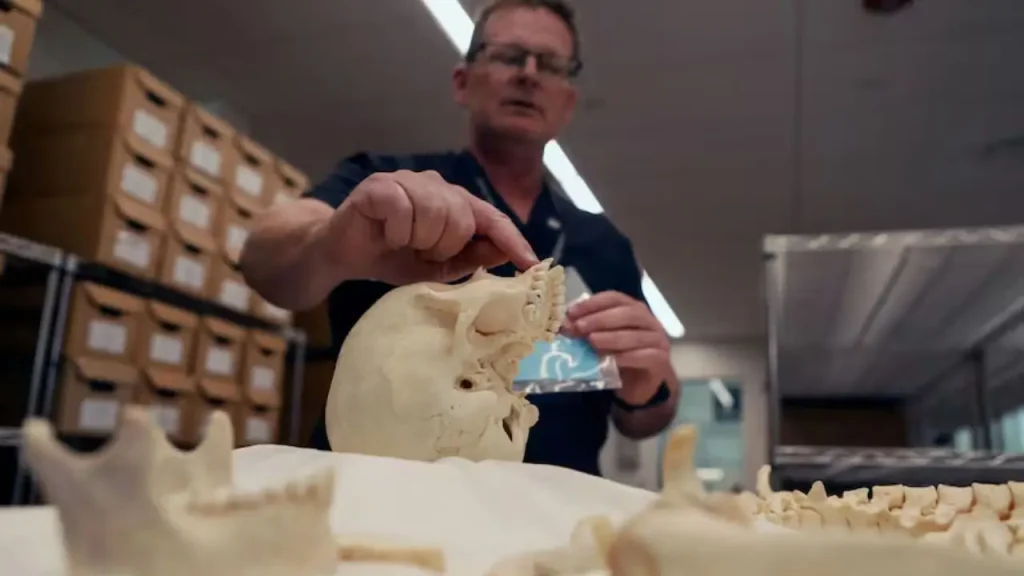
The public should also be cautious about social-media speculation. A nearby discovery can generate theories almost instantly, but theories are not evidence. In a case involving human remains, inaccurate claims can cause unnecessary pain for families and may distract attention from legitimate investigative leads.
Why Official Updates Matter
Authorities often release only limited information during the early stages of a case. That can frustrate people who want immediate answers, but withholding certain details can protect the integrity of an investigation. Investigators may need to keep specific evidence confidential so they can distinguish genuine information from rumors or false confessions.
For the Tucson desert human remains findings, the most important confirmed point is straightforward: human remains were discovered near West Ajo Way and South La Cholla Boulevard, and authorities said they did not have an indication that the remains were connected to Nancy Guthrie’s disappearance.
Until forensic authorities release additional findings, it is responsible to treat the case as an unidentified-remains investigation rather than assuming a connection to another case.
Conclusion
The tucson desert human remains findings have raised understandable questions, especially because the discovery occurred during the prolonged investigation into Nancy Guthrie’s disappearance. However, authorities have made clear that there is currently no indication connecting the remains found near West Ajo Way and South La Cholla Boulevard to Guthrie’s case.
The discovery also sheds light on a broader and much older issue in southern Arizona. The Sonoran Desert is a difficult environment where people can die and remain undiscovered for months or years. Thousands of deaths have been documented in the Arizona borderlands, and many individuals remain unidentified.
For investigators, the priority is therefore more than simply determining whether the remains belong to a missing person. They must establish identity, reconstruct what happened and, where possible, provide answers to relatives who may have spent years wondering what became of someone they loved. Until those forensic questions are answered, the facts should remain separate from speculation.
FAQs About Tucson Desert Human Remains Findings
1. Where were the human remains found near Tucson?
The remains were discovered in a desert area near West Ajo Way and South La Cholla Boulevard in the Tucson area of Pima County, Arizona. Authorities said the remains appeared to have been at the location for an extended period.
2. Are the remains connected to Nancy Guthrie?
Authorities have said there is currently no indication that the remains are connected to Nancy Guthrie’s disappearance. The location’s proximity to her home generated speculation, but no confirmed connection has been announced.
3. Who found the remains?
Pima County Sheriff’s Department Search and Rescue deputies responded after human remains were reported in the desert area. The discovery was subsequently investigated by authorities.
4. Do authorities know how long the remains had been there?
Officials said the remains appeared to have been at the location for an extended period. A precise estimate of the time since death requires forensic examination and has not been established publicly in the initial reports.
5. Why are human remains frequently discovered in the Arizona desert?
The region contains vast, remote areas with extreme heat, limited water and difficult terrain. Many people have died while traveling through these areas, particularly along migrant routes, while some deaths involve missing people or other circumstances.
6. Can remains found in the desert be identified after several years?
Yes. Investigators may use DNA, dental records, skeletal information, medical records and other evidence. Identification can be difficult, but advances in forensic science have allowed previously unidentified remains to be matched with missing people.
7. Does finding human remains automatically mean a crime occurred?
No. Human remains may result from natural causes, exposure, accidents, historical burials or other circumstances. The 2025 Tucson-area construction discovery, for example, turned out to involve a legal burial from the 1970s, with authorities finding no evidence of foul play.
8. Why might remains be discovered long after a person died?
Remote desert terrain can prevent remains from being noticed. Weather, vegetation, rugged landscapes and the sheer size of southern Arizona can make searches extremely difficult. Some remains are recovered months or years after death.
9. What happens after unidentified remains are recovered?
Investigators document the discovery and medical examiners conduct forensic examinations. Depending on the condition of the remains, specialists may use DNA, dental evidence, skeletal analysis and missing-person records to establish identity.
10. Could the Tucson desert investigation lead to more information later?
Yes. Additional forensic testing, missing-person comparisons or newly available information could produce an identification or clarify the circumstances surrounding the death. For now, authorities have not publicly established a connection between the August 2026 discovery and Nancy Guthrie’s disappearance
