

Introduction
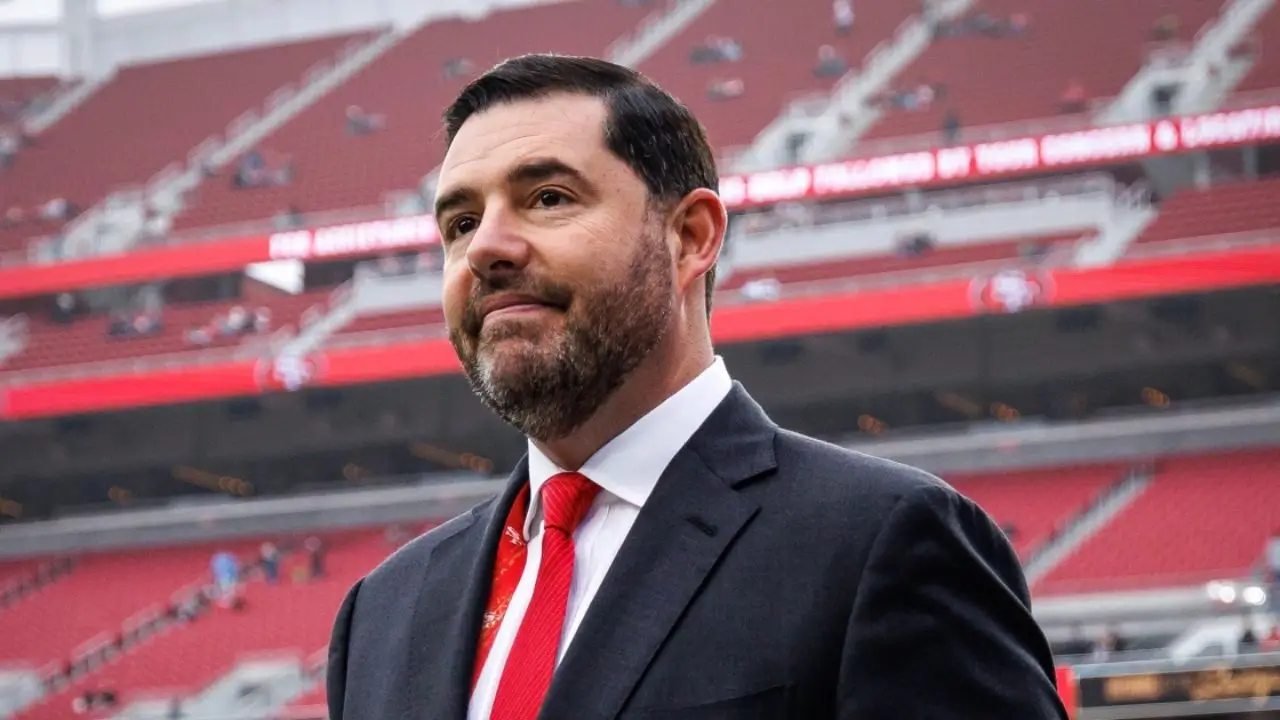
Few names are as closely connected to the modern San Francisco 49ers as Jed York. He inherited a powerful football legacy, but his story is not simply about being part of a famous sports family. Since entering the organization, York has been involved in the business, stadium development, community programs, ownership strategy, and long-term direction of one of the NFL’s most recognizable franchises.
York’s position has evolved significantly. He became the team’s chief executive officer in 2011 and spent years overseeing the organization before becoming its principal owner. In February 2026, the 49ers announced that Al Guido would become CEO, while York would continue as principal owner and remain deeply involved in the organization’s leadership. Under York’s tenure, San Francisco reached seven NFC Championship Games, three Super Bowls, and won five NFC West titles, according to the team’s official biography.
That combination of family history, business responsibility and competitive ambition makes Jed York an interesting figure far beyond the 49ers’ front office. His career offers a look at what it means to manage a historic sports franchise while attempting to preserve its identity and build for the future.
1. Who Is Jed York?
Jed York is a principal owner of the San Francisco 49ers and a member of the York-DeBartolo family that has controlled the franchise for decades. He is the eldest child of Denise DeBartolo York and Dr. John York, who serve as the team’s co-chairmen. His connection to the 49ers therefore began long before he held an executive title. The franchise was purchased by his grandfather, Edward J. DeBartolo Sr., in 1977, establishing the family connection that would eventually shape York’s professional life.
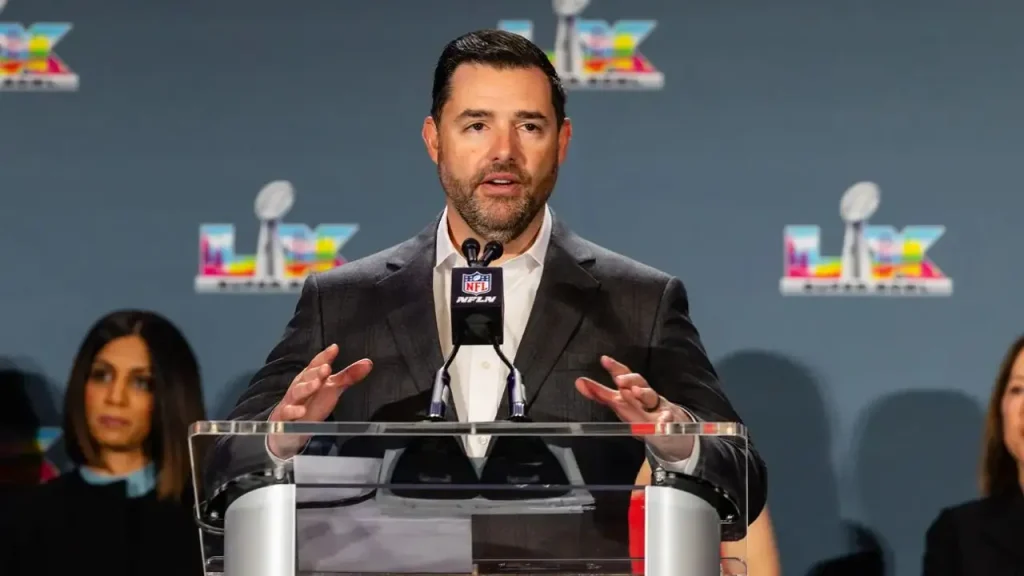
York was born and raised in Youngstown, Ohio. At Cardinal Mooney High School, he was a student-athlete and served as captain of the baseball team as well as student body president. He later attended the University of Notre Dame, where he earned degrees in finance and history. Before entering the 49ers organization, York worked as a financial analyst at Guggenheim Partners in New York, gaining experience in areas including private wealth management, hedge-fund risk analysis and collateralized debt obligations.
From Family Legacy to Executive Leadership
Joining a family-owned professional sports organization can create enormous expectations, particularly when that organization is the 49ers. York’s family history included the spectacular success of the DeBartolo era, when San Francisco became one of the NFL’s defining dynasties. His uncle, Edward DeBartolo Jr., was especially influential in establishing the team’s championship culture.
York has frequently acknowledged the influence of his parents, grandfather and uncle. Rather than treating the family connection as a simple inheritance, his career has involved learning how a major sports organization operates from both a business and cultural perspective. His official biography says he credits his family mentors with teaching him values including integrity, hard work and respect.
That background helps explain why York’s approach has often combined traditional football culture with an emphasis on business development, infrastructure and community engagement. He has not simply been interested in what happens on Sundays. His responsibilities have included the wider organization that surrounds the football team.
2. Jed York and the San Francisco 49ers
York’s rise through the 49ers organization coincided with one of the franchise’s most significant modern transformations. During his tenure, the team returned to sustained contention after difficult periods and eventually established itself as a regular participant in the NFC’s biggest games. The 49ers’ official record credits the York era with five NFC West titles, seven NFC Championship Game appearances and three Super Bowl appearances.
The Super Bowl appearances are particularly significant because they span different phases of the franchise. San Francisco reached Super Bowl XLVII during the Jim Harbaugh era, Super Bowl LIV during Kyle Shanahan’s tenure, and Super Bowl LVIII after another strong run through the NFC. Those appearances illustrate that the organization’s competitive identity survived changes in coaches, players and football personnel.
The Levi’s Stadium Transformation
One of the most visible accomplishments associated with York’s leadership is Levi’s Stadium. Groundbreaking took place on April 19, 2012, and the stadium opened in 2014. The 49ers were involved in managing the construction process, making the project a major organizational undertaking rather than simply a change of venue.
The stadium has since become much more than a place to watch football. It has hosted major sporting events, concerts, private gatherings and other large-scale events. The 49ers have also developed the venue as a destination for fans interested in the franchise’s history, with the 49ers Museum and Edward J. DeBartolo Sr. 49ers Hall of Fame forming part of that broader experience.
| Jed York | Details |
|---|---|
| Role | 49ers Principal Owner |
| Team | San Francisco 49ers |
| Parents | Denise DeBartolo York & John York |
| College | University of Notre Dame |
| Education | Finance & History |
| Former CEO | 2011–2026 |
| Current CEO | Al Guido |
| Stadium | Levi’s Stadium |
| Family | York-DeBartolo family |
| Known For | 49ers leadership & ownership |
The stadium’s importance became even clearer in 2026. Levi’s Stadium hosted Super Bowl LX in February, while it is also scheduled to host FIFA World Cup matches. The 49ers have described 2026 as a landmark year because the venue became the only stadium scheduled to host both the Super Bowl and FIFA World Cup matches in the same calendar year.
3. Jed York’s Leadership Style and Business Philosophy
Managing an NFL franchise requires a balance between competitive ambition and organizational stability. A team owner has to think beyond the current roster, considering facilities, finances, personnel, fan relationships, partnerships and the long-term value of the franchise. York’s career with the 49ers reflects that broad responsibility.
One notable element of his leadership has been his willingness to build a strong executive structure around the football operation. Rather than personally handling every operational responsibility, York has worked with senior executives and football leaders. In 2026, that structure became particularly clear when Al Guido was elevated to CEO after a decade as team president. The announcement stated that football operations would continue to be led by John Lynch and Kyle Shanahan, with Guido, Lynch and Shanahan reporting directly to York.
Building Around Football Operations
The distinction between ownership and football operations is important. York can set broad organizational priorities, but the daily construction of a competitive roster depends heavily on football executives, coaches and scouts. The 49ers’ modern success has therefore involved a team of decision-makers rather than one individual.
John Lynch and Kyle Shanahan have played major roles in the football side of the organization, while executives such as Al Guido have helped develop the business and operational side. York’s continued involvement as principal owner gives him a position above those departments, allowing him to concentrate on the overall direction of the franchise.
This structure also demonstrates an evolution in York’s own role. Earlier in his career, he was much more directly identified with the CEO position. By 2026, he had moved into a more ownership-focused position while retaining authority over the organization’s overall direction. The transition suggests a mature approach to leadership: as a franchise grows, responsibilities can be delegated without surrendering strategic control.
4. Family Legacy, Ownership and the Future of the 49ers
The story of Jed York cannot be separated from the DeBartolo-York family’s history with the 49ers. Edward J. DeBartolo Sr. purchased the franchise in 1977, while his son Eddie DeBartolo Jr. became one of the most celebrated owners in NFL history. Denise DeBartolo York and John York later became the team’s co-chairmen, continuing the family’s ownership connection.
That heritage creates both an advantage and a challenge. Few owners inherit a franchise with such a strong emotional identity. The 49ers are associated with Joe Montana, Jerry Rice, Steve Young, Bill Walsh, Ronnie Lott and the five Super Bowl championships of the DeBartolo era. For a younger family leader, maintaining that standard is a considerable responsibility.
Maintaining Control While Expanding Ownership
The ownership structure has also developed in recent years. In 2025, the 49ers announced investments from the Deeter, Griffith and Khosla families, followed later that year by an investment from Pete Briger Jr. and the Briger family. These investors acquired non-controlling minority interests. The team specifically stated that Jed York and the York family would retain control of the club.
That distinction matters. Bringing additional ownership partners into a franchise can provide new relationships, expertise and resources while allowing the controlling family to maintain its long-term vision. For the 49ers, it represents an expansion of the ownership group without abandoning the York family’s control.
York’s future therefore appears connected to two parallel goals: preserving the franchise’s family identity and making the organization increasingly sophisticated as a global sports business. The challenge will be ensuring that commercial growth never overwhelms the football culture that made the 49ers famous.
5. Jed York’s Community Work and Broader Impact
A major part of the York family’s identity within the 49ers organization is its emphasis on community involvement. The team’s charitable efforts include the 49ers Foundation and education initiatives connected with Levi’s Stadium. Jed York has served on boards and supported organizations involved in education, health, youth development and community programs.
One example is the Denise DeBartolo York Education Center at the 49ers Museum. According to the team, the center provides educational programming connected to science, technology, engineering, art and mathematics for K-8 students in Santa Clara and throughout the Bay Area. Since its creation in 2014, the program has provided experiences to more than 250,000 participants.
Continuing the Family’s Philanthropic Tradition
York has also used his position to support opportunities within professional sports. In 2011, the 49ers established the Denise DeBartolo York Fellowship, an entry-level marketing position designed to provide women with an opportunity to begin careers in the NFL. York introduced the fellowship as a tribute to his mother and her career in professional sports.
His community involvement reflects a broader philosophy associated with the York family: a sports franchise can influence the region around it. The 49ers’ identity is therefore not limited to the football field. Educational programs, charitable partnerships, youth initiatives and major events all contribute to how the organization interacts with its supporters and the wider Bay Area.

This aspect of York’s career is easy to overlook because football results naturally receive the most attention. Yet ownership of a major professional team carries responsibilities that extend beyond wins and losses. A franchise with a powerful regional identity can affect local education, employment, entertainment and charitable activity, and York has positioned community work as part of the organization’s long-term mission.
Conclusion
Jed York’s career with the San Francisco 49ers is a story of inherited responsibility combined with organizational evolution. He entered professional football carrying the name of one of the sport’s most famous ownership families, but his tenure has included significant developments of his own. The return to championship contention, the construction and growth of Levi’s Stadium, expansion of the organization’s business operations, community initiatives and evolving ownership structure have all shaped the modern 49ers.
His role is also changing. With Al Guido becoming CEO in 2026, York is now more clearly positioned as the franchise’s principal owner rather than its day-to-day chief executive. That shift does not represent a departure from the organization; instead, it gives him a different platform from which to guide its long-term direction.
For 49ers supporters, the ultimate measure of York’s legacy will always include football. Championships remain the standard by which great NFL organizations are judged. But the larger story is about whether he can preserve the character of a historic franchise while preparing it for a rapidly changing future. With the York family retaining control and the organization continuing to invest in football, business and community development, Jed York remains one of the central figures in the next chapter of 49ers history.
10 Frequently Asked Questions About Jed York
1. Who is Jed York?
Jed York is the principal owner of the San Francisco 49ers. He is the eldest child of Denise DeBartolo York and John York and has been a major figure in the franchise’s leadership for many years.
2. Is Jed York still the CEO of the 49ers?
No. In February 2026, the 49ers announced Al Guido as the organization’s new CEO. York continues as principal owner and remains involved in the overall leadership of the franchise.
3. What is Jed York’s role with the 49ers now?
York serves as the team’s principal owner. The organization has stated that John Lynch, Kyle Shanahan and CEO Al Guido report directly to him.
4. Who are Jed York’s parents?
Jed York’s parents are Denise DeBartolo York and Dr. John York, who serve as co-chairmen of the San Francisco 49ers.
5. Who is Jed York’s grandfather?
His grandfather was Edward J. DeBartolo Sr., who purchased the San Francisco 49ers in 1977 and established the family’s long-running connection to the franchise.
6. Did Jed York play football?
York was a student-athlete at Cardinal Mooney High School and later attended the University of Notre Dame. The 49ers’ official biography notes that he played football at Notre Dame, where he was part of a three-time Ivy League championship team according to a 2025 team announcement; however, the team’s current biography identifies him as a student-athlete at Cardinal Mooney and a Notre Dame graduate.
7. What did Jed York do before joining the 49ers?
Before entering the 49ers organization, York worked as a financial analyst at Guggenheim Partners in New York. His work included private wealth management, hedge-fund risk analysis and collateralized debt obligations.
8. What has Jed York accomplished with the 49ers?
During his tenure, the 49ers won five NFC West titles, reached seven NFC Championship Games and appeared in three Super Bowls. His leadership was also involved in the development of Levi’s Stadium.
9. Does Jed York own the 49ers by himself?
No. The 49ers are controlled by the York family, alongside other ownership partners. Recent investors have acquired non-controlling minority interests, while the team has stated that Jed York and the York family retain control.
10. Where does Jed York live?
The 49ers’ official biography states that Jed York lives in the Bay Area with his wife, Danielle, and their two sons
