


Introduction
what is a composite numberUnderstanding basic number theory is an essential part of mathematics, and one of the most important concepts students encounter is what is a composite number. This topic forms the foundation of arithmetic, algebra, and advanced mathematical reasoning. Whether you are a student, teacher, or simply someone refreshing your math skills, learning about composite numbers helps you better understand how numbers are structured and how they interact with each other.
In simple terms, what is a composite number can be explained as a number that has more than two factors. Unlike prime numbers, which are only divisible by 1 and themselves, composite numbers can be divided evenly by multiple integers. This guide will take you through everything you need to know in a clear, engaging, and easy-to-understand way.
Understanding What is a Composite Number in Mathematics
To fully understand what is a composite number, we must first look at how numbers are classified in mathematics. Whole numbers greater than 1 fall into two main categories: prime numbers and composite numbers. Composite numbers are those that have more than two positive divisors.
For example, the number 4 is a composite number because it can be divided by 1, 2, and 4. Similarly, 6, 8, 9, 10, and many others fall into this category. This makes composite numbers highly important in factorization and mathematical problem-solving.
Another key aspect of understanding what is a composite number is recognizing that 1 is neither prime nor composite. This is because it only has one factor, which is itself. Composite numbers always start from 4 onwards in the number system.
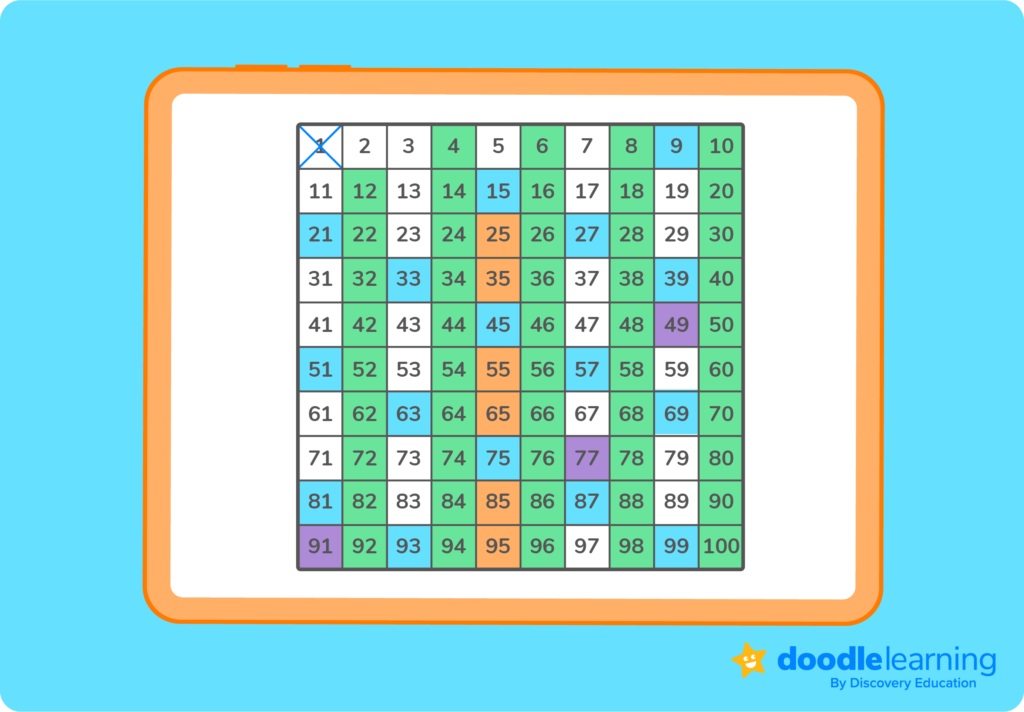
Mathematically, composite numbers play a major role in building multiplication tables, simplifying fractions, and solving equations. Without understanding them, it becomes difficult to grasp more advanced mathematical concepts.
Key Characteristics of Composite Numbers
One of the main characteristics of what is a composite number is that it has more than two factors. This means it can be broken down into smaller whole numbers through multiplication. For instance, 12 can be expressed as 2 × 6 or 3 × 4, showing multiple factor combinations.
Another important characteristic is that all even numbers greater than 2 are composite numbers. This is because they are divisible by 2, in addition to 1 and themselves. For example, 14, 16, 18, and 20 are all composite numbers.
Composite numbers also follow predictable patterns in number theory. As numbers increase, the likelihood of them being composite also increases because there are more possible factors. This is an important observation when studying what is a composite number in advanced mathematics.
Additionally, composite numbers can be either even or odd. While most even numbers are composite, odd numbers like 9, 15, 21, and 25 are also composite because they have additional divisors besides 1 and themselves.
Difference Between Prime and Composite Numbers
To clearly understand what is a composite number, it is important to compare it with prime numbers. Prime numbers are numbers that have exactly two factors: 1 and the number itself. Examples include 2, 3, 5, 7, and 11.
In contrast, composite numbers have more than two factors. For example, 10 has factors 1, 2, 5, and 10, making it a composite number. This difference is essential in understanding number classification.
Another key difference is their role in mathematics. Prime numbers are often considered the building blocks of numbers because every composite number can be broken down into prime factors. This process is known as prime factorization.
When studying what is a composite number, it becomes clear that composite numbers depend on prime numbers for their structure. Without primes, composites could not be expressed in their simplest form. This relationship forms the backbone of many mathematical theories.
How to Identify a Composite Number Easily
Identifying what is a composite number becomes easier when you follow a simple step-by-step approach. First, check if the number is greater than 1, because composite numbers always start from 4 onwards.
Next, test whether the number has divisors other than 1 and itself. If it does, then it is a composite number. For example, 15 can be divided by 1, 3, 5, and 15, so it is composite.
Another method is using divisibility rules. If a number is divisible by 2, 3, 5, or other small integers, it is likely to be composite. This method helps quickly determine what is a composite number without complex calculations.
Prime factorization is also a useful technique. By breaking a number into smaller prime numbers, you can determine whether it is composite. If more than one factor exists besides 1 and the number itself, it is composite.
Real-Life Applications of Composite Numbers
Understanding what is a composite number is not just important in mathematics but also in real-life applications. Composite numbers are widely used in engineering, computer science, and data encryption systems.
In computer science, composite numbers play a role in cryptography. Large composite numbers are used to secure data because factoring them into primes is computationally difficult. This makes them essential in cybersecurity systems.
In everyday life, composite numbers appear in grouping and sharing situations. For example, when dividing objects into equal groups, composite numbers make it easier to form multiple arrangements.
Another application is in measurement and construction. Builders often use composite numbers to divide materials evenly, ensuring efficiency and accuracy in design and structure.
Thus, understanding what is a composite number helps in both academic learning and practical problem-solving scenarios.
Common Mistakes When Learning Composite Numbers
When learning what is a composite number, students often make common mistakes. One of the most frequent errors is confusing prime numbers with composite numbers. This usually happens when learners do not fully understand factorization.
Another mistake is assuming that all odd numbers are prime. In reality, many odd numbers like 9, 15, and 21 are composite because they have multiple factors.
Students also sometimes forget that 1 is neither prime nor composite. This misunderstanding can lead to incorrect classification in problems involving what is a composite number.
Finally, some learners rely only on memorization instead of understanding the concept. This makes it harder to apply knowledge in real problem-solving situations. A conceptual understanding is always more effective than rote learning.
Conclusion
In conclusion, what is a composite number is a fundamental concept in mathematics that describes numbers with more than two factors. These numbers play an essential role in arithmetic, algebra, and real-world applications. By understanding their properties, differences from prime numbers, and methods of identification, learners can build a strong foundation in number theory.
From basic calculations to advanced cryptography, composite numbers are everywhere in mathematics and technology. Mastering this concept not only improves mathematical skills but also enhances logical thinking and problem-solving abilities. With practice and understanding, anyone can confidently identify and work with composite numbers.
